
From the inventor of prefabricated housing to the first female Pritzker Prize laureate: with their pioneering spirit, courage and expertise, these women have had a decisive impact on the architecture and construction industry as well as on urban and landscape design. We introduce these personalities and show why their influence is so important.
Sarah Maria Guppy
Sarah Guppy was born in Birmingham in 1770 into a wealthy family. With her 1811 patent for the construction of bridges without piers, she is regarded as a pioneer in construction engineering. Ten patents are attributed to her. At the time, women were not permitted to register patents themselves, and the process was also very expensive. In addition to suspension bridges, her inventions included protective measures for railway embankments against erosion and landslips through planting, as well as a method for sealing ship hulls. She also co-financed the Bristol Institute for the Advancement of Science and influenced technical debate in construction through her work as an author.
Kate Gleason
Born in 1865, Kate Gleason began helping in her father’s machine tool company, Gleason Works, at the age of twelve — at a time when women and girls had neither the right to vote nor access to education. Nevertheless, in 1884 she became the first woman to study mechanical engineering at Cornell University in Ithaca. In 1914, Gleason became the first female member of the American Society of Mechanical Engineers. During and after the outbreak of the First World War, she strongly advocated social housing. To this end, she developed a method enabling rapid and cost-effective construction: the production of prefabricated walls made from poured concrete using formwork. From 1921 onwards, Gleason’s construction company sold such six-room prefabricated houses under the name Concrest. Gleason Works still exists today.
Marion Mahony Griffin
Marion Mahony Griffin was born in Chicago in 1871 and, following her father’s suicide, was especially supported by her mother. In 1894 she graduated from the Massachusetts Institute of Technology. Griffin was among the first licensed female architects worldwide. From 1895 to 1909 she was a key collaborator of the renowned architect Frank Lloyd Wright. Her drawings in particular — combining art and architecture — shaped Wright’s visual identity. During her lifetime, Marion Mahony Griffin received little recognition. Today, architecture and interior design awards bear her name, and there is a Mahony Griffin Beach in Chicago.
Nora Stanton Blatch Barney
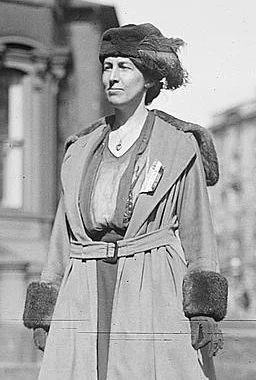
Born in 1883, Nora Stanton Blatch Barney was a civil engineer and property developer in New York. In 1905, she became the first woman in the United States to earn a university degree in civil engineering at Cornell University. She was also the first woman to become a member of the American Society of Civil Engineers. Stanton was involved in bridge construction at the American Bridge Company and in the construction of Underground tunnels in New York City. From 1914 onwards, the committed women’s rights campaigner and later peace activist gained recognition as the planner of numerous buildings on Long Island. In 2017, the New York City Department of Environmental Protection named a tunnel-boring machine after Nora Stanton Blatch Barney in recognition of her work on early water supply projects in the Catskill Mountains.
Margarete Schütte-Lihotzky

The Austrian architect, born in 1897, revolutionised modern living primarily with her design of the Frankfurt Kitchen. From 1915 to 1919 she studied at the former Imperial-Royal School of Arts and Crafts — now the University of Applied Arts Vienna. Over the course of her career, the Vienna-born architect worked with figures such as Adolf Loos and played a key role in planning numerous housing estates. She designed the Frankfurt Kitchen in 1926 according to the latest ergonomic research of the time. It is regarded as the prototype of the modern fitted kitchen and an important contribution to modular construction and planning.
Zaha Hadid
In 2004, Zaha Hadid became the first woman to win the prestigious Pritzker Prize. Born in Baghdad in 1950, the architect gained international recognition through her designs and realised numerous projects. By the time of her death at the age of 65, Zaha Hadid had established a globally active architectural practice with around 250 employees. Through her work, she created architectural landmarks across the world.
Anne Lacaton

French architect and university professor Anne Lacaton, born in 1955, is regarded as a pioneer of sustainable refurbishment. Her architectural practice Lacaton & Vassal, which she founded with Jean-Philippe Vassal, is internationally recognised for projects based on the principle of transformation rather than demolition. One of her best-known projects is the Art Deco Palais de Tokyo in Paris. Using straightforward means — such as adding winter gardens and introducing intelligent new structures — Lacaton transforms neglected residential towers and housing estates from the 1960s into contemporary, light-filled and affordable homes. In 2019, she and Vassal won the Mies van der Rohe Award. In 2021, their work was honoured with the Pritzker Prize.
Odile Decq
French architect Odile Decq, also born in 1955, has been a prominent figure since the 1990s. She has designed products for brands such as Alessi. In addition to guest professorships and teaching positions — including at the Academy of Fine Arts Vienna — Decq founded her own school in Lyon together with Matteo Cainer in 2014. The Confluence Institute for Innovation and Creative Strategies in Architecture is an independent international architecture school in Paris. Its aim is to “break the rules of conventional architectural education and exceed the expectations of traditional architectural pedagogy”. With projects such as the Antares Tower in Barcelona, Odile Decq has won numerous architecture and design awards.
Kazuyo Sejima

Japanese architect Kazuyo Sejima was born in 1965 and began her career after graduating in 1981 with the renowned architect Toyo Ito. She has run her own practice since 1987. Sejima designed, for example, the New Museum of Contemporary Art in New York and in 2010 became the first woman to direct the Venice Architecture Biennale. In the same year, she was awarded the Pritzker Prize for her “graceful yet powerful” designs. In 2015, Kazuyo Sejima succeeded Zaha Hadid as a lecturer at the Institute of Architecture at the University of Applied Arts Vienna.
Regine Leibinger
Born in 1963, Regine Leibinger studied architecture at the Technical University of Berlin and at Harvard University, where she also taught. From 2006 to 2014 she was Professor of Structural Design and Construction at TU Berlin. Together with Frank Barkow, she has run the German-American architectural practice Barkow Leibinger in Berlin since 1993. Leibinger is considered an influential figure in contemporary German architecture. She primarily designs modern industrial and commercial buildings, for example for Trumpf. In 2022, Regine Leibinger founded the non-profit organisation Experimental to support projects that explore new areas of architecture in order to “change the way and the materials with which we build”.
Jeanne Gang
Born in 1964, Jeanne K. Gang is the founder of Studio Gang Architects, established in Chicago in 1997. Before that, she worked at the architectural practice Office for Metropolitan Architecture (OMA). Jeanne Gang became known for her innovative high-rise designs. For example, the 262-metre-high Aqua Tower in Chicago was designed by her; in 2009 she received the Emporis Skyscraper of the Year Award. In 2016, she was named Architect of the Year at the Women in Architecture Awards.
Barbara Holzer
Zurich-based architect Barbara Holzer, born in 1966, is known for museums, exhibitions and large-scale projects such as the residential and office quarter cataneo and the visitor centre of the Schöningen Research Museum, paläon, in Lower Saxony, Germany. After studying at ETH Zurich, Holzer worked with Daniel Libeskind in Berlin. Since 2002 she has run her own architectural practices in Switzerland and internationally.
Marina Tabassum
Marina Tabassum was born in 1969 and graduated with distinction from the Bangladesh University of Engineering and Technology in 1995. Today she heads her practice, Marina Tabassum Architects (MTA), in Dhaka. In addition to projects such as the Baitur Rauf Jame Mosque, from 2017 onwards she developed houses for people in the Ganges Delta — who are frequently affected by flooding — together with students and local craftspeople. Each house was not permitted to cost more than USD 2,000. The project was developed as part of Tabassum’s teaching at the Harvard University Graduate School of Design. Since 2020, Tabassum has been an honorary doctorate recipient of the Technical University of Munich. Her work centres on connections to local culture and history, traditional building materials and regional climatic conditions. In 2025, she realised a pavilion at the Serpentine Gallery in London’s Kensington Gardens. This makes her one of a number of famous personalities, including Daniel Libeskind, Zaha Hadid, Jean Nouvel and Frank Gehry.
Tatiana Bilbao
The Mexican architect is the founder of the internationally active architectural practice Tatiana Bilbao Estudio. Her works include the Botanical Garden of Culiacán and the exhibition hall in the Jinhua Architecture and Art Park in China. Born in 1972 and graduating with distinction in 1996, Tatiana Bilbao now focuses on social architecture and sustainable materials. She is a driving force behind collaborative and inclusive planning and construction. Commissioned by Cistercians from Heiligenkreuz Abbey in Austria, Bilbao is constructing the new Maria Friedenshort monastery in Neuzelle, Germany. She has held numerous teaching appointments and regularly teaches at the Yale School of Architecture.
Heather Dubbeldam

Canadian architect Heather Dubbeldam founded Dubbeldam Architecture + Design in Toronto in 2003. She is widely recognised for her commitment to sustainable design and construction. With projects such as Bunkie on the Hill, the Bata Shoe Factory and a mixed-use creative hub housing her own practice, Dubbeldam creates new possibilities through the sustainable revitalisation of existing buildings. According to the practice, Dubbeldam Architecture + Design has won more than 100 awards to date. Heather Dubbeldam is also actively involved on a voluntary basis in various committees and organisations promoting sustainable architecture.


